


Author: Ashton Stallings
Release: DCCA EXPANDS PATHWAY FOR MENTAL HEALTH PROFESSIONALS AHEAD OF JULY 1 LAUNCH
June 19, 2026 at 9:46 pm
Last Updated On June 19, 2026 at 10:07 pm

STATE OF HAWAIʻI
KA MOKU ʻĀINA O HAWAIʻI
JOSH GREEN, M.D.
GOVERNOR
KE KIAʻĀINA
DEPARTMENT OF COMMERCE AND CONSUMER AFFAIRS
KA ʻOIHANA PILI KĀLEPA
NADINE Y. ANDO
DIRECTOR
KA LUNA HOʻOKELE
PROFESSIONAL AND VOCATIONAL LICENSING DIVISION
CINDY A. MATSUSHITA
LICENSING ADMINISTRATOR
DCCA EXPANDS PATHWAY FOR MENTAL HEALTH PROFESSIONALS AHEAD OF JULY 1 LAUNCH
FOR IMMEDIATE RELEASE
June 19, 2026
HONOLULU — The Department of Commerce and Consumer Affairs (DCCA) is preparing for the July 1 implementation of Act 93 (2024), which creates new provisional licenses for associate psychologists, associate marriage and family therapists, and associate mental health counselors. The law is intended to reduce barriers for emerging professionals, strengthen Hawaiʻi’s mental health workforce, and improve access to care statewide. Applications opened June 1, and DCCA has dedicated additional staff and resources to process applications as quickly as possible. Current supervisors are only required to complete supervision verification forms for applicants.
Licensure requirements differ by profession. Individuals are encouraged to review the category below that applies to them.
Marriage and Family Therapists
Under HRS §451J-5, licensure is required only for individuals who use, or represent themselves under, the title “marriage and family therapist,” “licensed marriage and family therapist,” “associate marriage and family therapist,” or “licensed associate marriage and family therapist.” The licensure requirement is tied to use of these titles, not to the underlying work performed.
Licensure is not required for (HRS §451J-6):
- Individuals whose work overlaps with the practice of marriage and family therapy, provided they do not use the protected titles listed above.
- Students completing a supervised practicum as part of an accredited graduate program, provided they are identified by an appropriate trainee title.
- Members of other licensed professions (such as social work, psychology, nursing, or medicine) providing services consistent with their own profession’s standards, provided they do not use the protected MFT titles.
Mental Health Counselors
Under HRS §453D-5, licensure is required for any individual who either uses a protected title — “licensed mental health counselor,” “mental health counselor,” “licensed associate mental health counselor,” or “associate mental health counselor” — or who engages in the practice of mental health counseling.
Licensure is not required for (HRS §453D-6):
- Individuals whose work overlaps with the practice of mental health counseling, provided they do not use, or imply that they hold, a protected title or describe their services as “mental health counseling.”
- Members of the clergy acting within their religious role, provided they do not use a protected title or describe their services as mental health counseling.
- Students completing a supervised practicum as part of an accredited program, identified by an appropriate trainee title.
- Government employees (federal, state, or county) acting in a counseling capacity within their government role.
- Individuals obtaining supervised clinical experience toward licensure as a psychologist, social worker, marriage and family therapist, or other licensed profession, provided their title indicates trainee or intern status.
Psychologists
Under HRS §465-2, licensure is required for any individual who represents themselves as a “psychologist” or “associate psychologist,” or who engages in the practice of psychology.
Licensure is not required for (under HRS §465-3) the following persons (as are pertinent)
- College or university faculty teaching, lecturing, or conducting research in psychology, within the scope of their academic employment.
- Persons working under the direction of a licensed psychologist who perform professional services defined as the practice of psychology, provided they do not call themselves a psychologist or associate psychologist or imply they are licensed to practice psychology.
- Government employees in school psychologist, psychological examiner, or non-diagnostic/non-treatment positions, while acting within that government role.
- Students enrolled in a psychology training program, provided they do not represent themselves as a psychologist or associate psychologist.
- Members of other licensed professions, mental health professions not requiring licensure, or the clergy, providing services within their own scope of practice or role, provided they do not represent themselves as a psychologist or associate psychologist.
- Certain U.S. Department of Defense psychologists providing telehealth services to neighbor island beneficiaries under specified conditions.
Individuals uncertain whether their role, title, or services require licensure are encouraged to contact PVL directly for guidance.
Application materials and program-specific information are available on the respective board and program pages at https://cca.hawaii.gov/pvl. For general inquiries, contact the Professional and Vocational Licensing Division at 1-844-808-3222 ext. 1.
Supervision Verification
Regarding post-master’s and post-doctoral supervision verification, only the applicant’s current supervisor is required to complete the supervision verification form. Applicants may voluntarily provide a list of former supervisors but are not required to do so.
Under the law, associate-level practitioners must practice under the clinical supervision of a licensed professional in good standing with the Department:
- Associate marriage and family therapists practice under a licensed marriage and family therapist or other licensed mental health professional in good standing (HRS §451J-7.2).
- Associate mental health counselors practice under a licensed clinical supervisor in good standing (HRS §453D-7.5).
- Associate psychologists practice under the direct supervision of a supervising psychologist who holds a current, active, and unencumbered license, and who must notify the licensing board within ten days of the termination or completion of supervision (HRS §465-7.2).
Applicants are encouraged to check the website regularly for updates, application materials and a frequently asked questions (FAQ) document.
###
Media Contact:
William Nhieu
Communications Officer
Department of Commerce and Consumer Affairs, State of Hawai‘i
Phone: 808-586-7582
Email: [email protected]
Release: HAWAIʻI OFFICE OF CONSUMER PROTECTION OPPOSES FEDERAL SECURE DATA ACT LEGISLATION
June 16, 2026 at 1:24 am
Last Updated On June 19, 2026 at 10:08 pm

STATE OF HAWAIʻI
KA MOKU ʻĀINA O HAWAIʻI
JOSH GREEN, M.D.
GOVERNOR
KE KIAʻĀINA
DEPARTMENT OF COMMERCE AND CONSUMER AFFAIRS
KA ʻOIHANA PILI KĀLEPA
NADINE Y. ANDO
DIRECTOR
KA LUNA HOʻOKELE
OFFICE OF CONSUMER PROTECTION
MANA MORIARTY
EXECUTIVE DIRECTOR
HAWAIʻI OFFICE OF CONSUMER PROTECTION OPPOSES FEDERAL SECURE DATA ACT LEGISLATION
Federal Legislation Would Weaken and Preempt Strong State Privacy Protections
FOR IMMEDIATE RELEASE
June 15, 2026
HONOLULU — The Hawaiʻi Department of Commerce and Consumer Affairs’ Office of Consumer Protection (OCP) joined a coalition of 15 attorneys general and state agencies in opposing the Securing and Establishing Consumer Uniform Rights and Enforcement over Data Act (SECURE Data Act), a proposed federal data privacy bill.
The SECURE Act would impose a federal ceiling on privacy protections, limiting the Hawaiʻi Legislature’s ability to address new technologies that impact consumer privacy and to enact stronger laws to protect Hawaiʻi consumers as privacy risks evolve.
In its letter, the coalition calls on Congress to reject the SECURE Data Act and to respect additional privacy protections states already grant their residents or would provide in future state-level legislation.
“The SECURE Data Act would effectively freeze privacy protections at the federal level and prevent Hawaiʻi from adopting stronger safeguards in the future,” said Mana Moriarty, executive director of OCP. “States need the flexibility to respond to new technologies and emerging privacy risks to ensure consumers remain protected.”
Comprehensive state privacy laws have set minimum data privacy standards, including heightened protections for minors and sensitive consumer data, limits on how data may be used and retained, and the ability for consumers to stop the sale of their data via a universal opt-out preference signal. The SECURE Data Act would wipe out these meaningful protections, making it harder for consumers to exercise their rights, give businesses more discretion on how to use and retain their data, and significantly limit enforcement remedies.
In the letter, the coalition argues that the bill moves privacy rights in the wrong direction, leaving consumers worse off and with fewer protections. Any federal privacy framework must leave room for states to legislate responsively to changes in technology and data collection practices, as states are better equipped to address the unique needs of their residents and quickly adjust to the challenges presented by technological innovation.
In sending the letter, the Hawaiʻi Office of Consumer Protection joins the attorneys general of California, Connecticut, Illinois, Maine, Maryland, Massachusetts, Minnesota, Nevada, New Hampshire, Oregon, Vermont, Virginia and Washington, as well as the California Privacy Protection Agency.
###
The Office of Consumer Protection (OCP) is a division of the Hawaiʻi Department of Commerce and Consumer Affairs. OCP promotes fair and honest business practices by investigating alleged violations of consumer protection laws, by taking legal action to stop unfair or deceptive practices in the marketplace and by educating the consumer public and businesses regarding their respective rights and obligations.
Media Contact:
William Nhieu
Communications Officer
Department of Commerce and Consumer Affairs, State of Hawaiʻi
Phone: 808-586-7582
Email: [email protected]
Release: APPLICATIONS OPEN FOR NEW MENTAL HEALTH PROVISIONAL LICENSES
June 2, 2026 at 9:09 pm
Last Updated On June 18, 2026 at 6:39 pm

STATE OF HAWAIʻI
KA MOKU ʻĀINA O HAWAIʻI
JOSH GREEN, M.D.
GOVERNOR
KE KIAʻĀINA
DEPARTMENT OF COMMERCE AND CONSUMER AFFAIRS
KA ʻOIHANA PILI KĀLEPA
NADINE Y. ANDO
DIRECTOR
KA LUNA HOʻOKELE
PROFESSIONAL AND VOCATIONAL LICENSING DIVISION
CINDY A. MATSUSHITA
LICENSING ADMINISTRATOR
APPLICATIONS OPEN FOR NEW MENTAL HEALTH PROVISIONAL LICENSES
FOR IMMEDIATE RELEASE
June 2, 2026
HONOLULU — Individuals seeking provisional licensure as associate psychologists, marriage and family therapists, or mental health counselors, may begin submitting applications, to be accepted by the Hawaiʻi Department of Commerce and Consumer Affairs Professional and Vocational Licensing Division. The new provisional licenses take effect July 1, 2026.
Established under Act 93, Session Laws of Hawaiʻi 2024, the provisional licenses allow qualified associate-level practitioners to practice under required clinical supervision and seek insurance reimbursement while working toward full licensure. Prior to provisional licenses, associate-level practitioners faced significant barriers to reimbursement, limiting their ability to build sustainable practices and serve patients in need.
The new license categories are intended to expand access to mental health services across the state, while maintaining regulatory oversight and public protection.
Eligible practitioners include associate psychologists, associate marriage and family therapists and associate mental health counselors. Applicants must meet applicable educational and supervised experience requirements for their respective license category. Application materials and program-specific information are available on the respective board and program pages at https://cca.hawaii.gov/pvl.
Applicants are encouraged to check the website regularly for updates, application materials and a frequently asked questions (FAQ) document. DCCA’s early release of application information reflects the department’s continued commitment to supporting licensees and streamlining licensing operations.
For general inquiries, contact the Professional and Vocational Licensing Division at 1-844-808-3222 ext. 1.
###
Media Contact:
William Nhieu
Communications Officer
Department of Commerce and Consumer Affairs, State of Hawai‘i
Phone: 808-586-7582
Email: [email protected]
Release: HAWAIʻI CELEBRATES 40 YEARS AS GLOBAL LEADER IN CAPTIVE INSURANCE
May 26, 2026 at 6:39 pm
Last Updated On June 18, 2026 at 6:40 pm
STATE OF HAWAIʻI
KA MOKU ʻĀINA O HAWAIʻI
JOSH GREEN, M.D.
GOVERNOR
KE KIAʻĀINA
DEPARTMENT OF COMMERCE AND CONSUMER AFFAIRS
KA ʻOIHANA PILI KĀLEPA
NADINE Y. ANDO
DIRECTOR
KA LUNA HOʻOKELE
SCOTT K. SAIKI
INSURANCE COMMISSIONER
HAWAIʻI CELEBRATES 40 YEARS AS GLOBAL LEADER IN CAPTIVE INSURANCE
FOR IMMEDIATE RELEASE
May 26, 2026
HONOLULU — Hawaiʻi proudly marks 40 years of leadership in the captive insurance industry, celebrating a legacy of innovation, stability and partnership that has positioned the state as one of the world’s premier captive jurisdictions.
Since establishing its captive insurance statutes in 1986, Hawaiʻi has built a strong and respected foundation in the industry. Today, the state is home to 274 active captive insurance companies and wrote over $18 billion in premiums last year. The captive insurance industry annually invests $2.7 billion through Hawaiʻi’s financial institutions and generates more than $46.3 million in direct local expenditures.
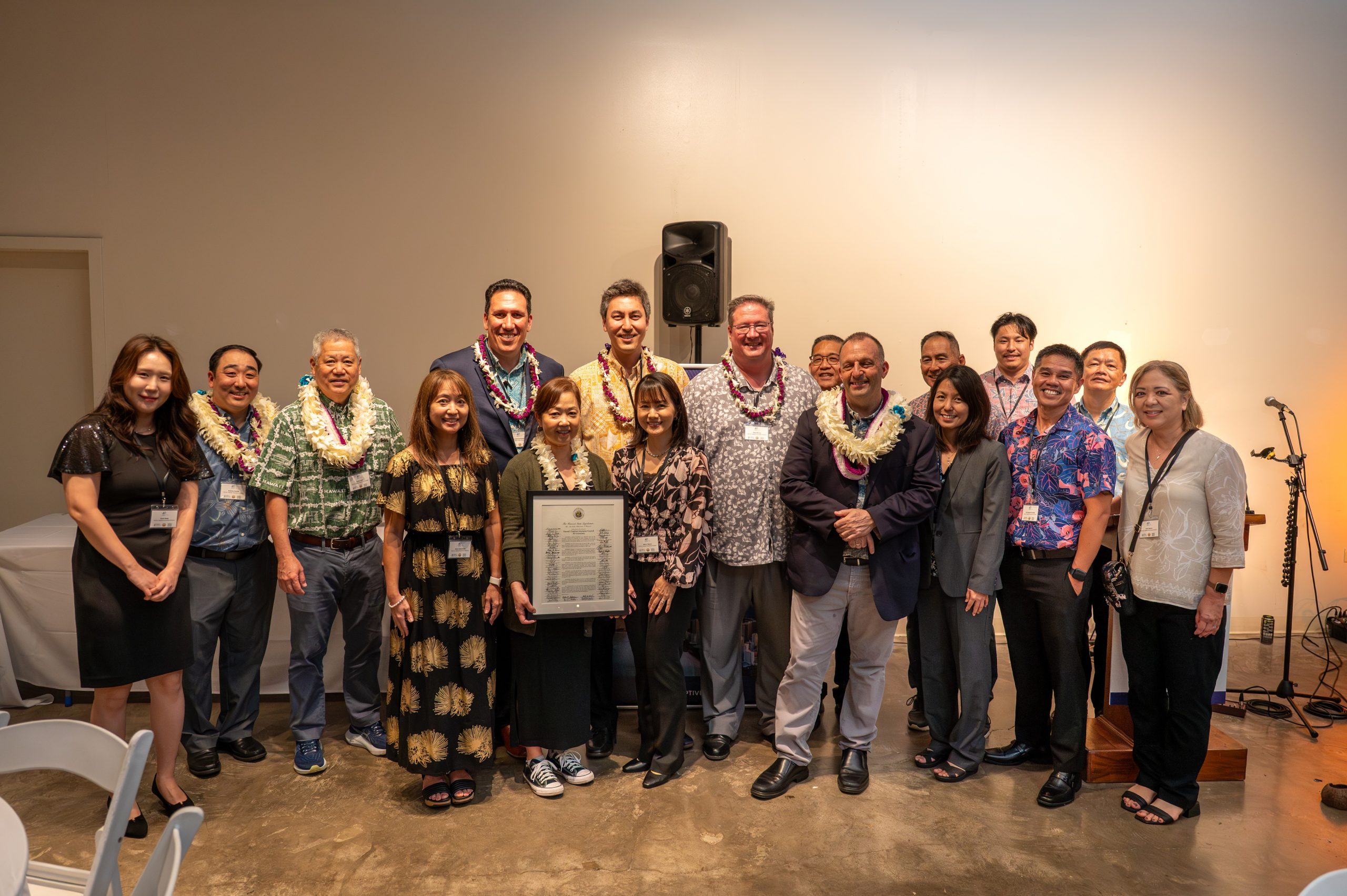
To commemorate the 40th anniversary of captive insurance in Hawaiʻi, a reception at the Bishop Museum on Oʻahu, brought together captive owners, legislators, representatives from the Hawaiʻi Captive Insurance Council and business leaders from local, national and international companies and organizations. The event highlighted the strong partnerships that have contributed to Hawaiʻi’s longevity.
“As we celebrate this milestone, we also look to the future,” said Governor Josh Green. “Hawaiʻi is dedicated to supporting the captive insurance industry for many years to come.”
“Hawaiʻi’s success in the captive insurance sector is rooted in a commitment to collaboration, sound regulation and sustained growth,” added Captive Insurance Administrator and Deputy Commissioner Andrew Kurata. “Over the past four decades, we have worked closely with industry partners to create a business-friendly environment that supports both innovation and accountability.”
Forty years of experience has enabled Hawaiʻi to cultivate a diverse and well-established infrastructure that allows captive insurance companies to thrive. The state’s approach balances responsiveness to industry needs with a strong regulatory framework designed to ensure financial security and solvency. As a recent example, legislation was just passed to pilot an innovative new risk-based supervisory model. Hawaiʻi is also one of the few jurisdictions with a full-time, 16-member team dedicated to serving the captive industry.
For more information about Hawaiʻi’s captive insurance program, please visit cca.hawaii.gov/ins/captive-insurance/.
# # #
About the Hawaiʻi Insurance Division
The Hawaiʻi Insurance Division regulates the Hawaiʻi insurance industry, issues licenses; examines the fiscal condition of Hawaiʻi-based companies; reviews rate and policy filings and investigates insurance-related complaints.
The Captive Insurance Branch was established to provide dedicated resources to assist the Insurance Commissioner with monitoring, regulation and development of captive insurance companies in Hawaiʻi.
Media Contact:
William Nhieu
Communications Officer
Department of Commerce and Consumer Affairs, State of Hawaiʻi
Phone: 808-586-7582
Email: [email protected]